


It wasn’t until I moved away from Seattle for the first time that I realized not everyone in the world becomes a coffee junkie by age 15. My memories of growing up in the Pacific Northwest are steeped in coffee. How my Dad took it straight and black as tar and my mom brewed coffee that would put hairs on your chest, and then drenched it in cream and sugar until it was unrecognizable.
I’ve heard before that coffee is so popular in Seattle because its a legal and widely available upper in one of the most depressed cities in the world. That may be true, but I think it goes deeper than that.
Rain and coffee bind Pacific Northwestern-ers together into a club not many outsiders can endure joining. The rain is a litmus test for who deserves to enjoy what this wonderful city has to offer, because they can recognize that all truly great things come with a little sacrifice. And when we crowd into the coffee shops during the winter (and spring…and fall…) months to avoid the misty air outside, a bond is forged between us and our stimulant.
But tragically, coffee plants are too delicate to grow in our spongy environment. They need sunshine, warmth and red, fertile soil, so we’re forced to look abroad to maintain what is deeply Seattle about us, depending on countries halfway around the world to supply us with our caffeine fix.
So I was struck by the poetry when, my junior year of college, I ended up in Kenya, the place where so many of my childhood memories had been grown.
During the first week of my study abroad program, I met up with the one other American studying at University of Nairobi. We flopped onto cafeteria chairs, beaten down by absent professors, cultural miscommunications and the constant racket of a language you don’t understand. And we did what any born and bred American girls would do. We set down to debrief over caffeine.
I was excited that for the first time, I was going to taste coffee grown and cultivated no more than a dozen miles away. When the waiter came over, he set down our orders in front of us, ceramic cups full to the brim with freshly poured, steaming hot, translucent… water. Balanced delicately on the side of the saucer was a neat little square packet.
We both stared at it, dumbfounded.
“Nescafe?”
Now I had never even seen instant coffee until I was nineteen. The stuff was barred from our house along with Wonder Bread and cable TV. It wasn’t until a hostel in Dublin when I assumed it was hot chocolate mix and dumped heaping spoonfuls of it into my mug. Describing the result as nauseating would be far too generous.
Little did I know that was just the first of many times I would sip those freeze-dried, rehydrated coffee granules and feel deflated, confused and utterly homesick.
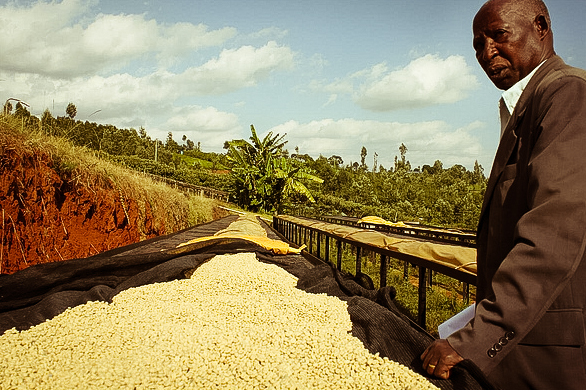
Six million Kenyans may be employed by the coffee industry, and it may be just a few hundred miles from the birthplace of coffee, but it turns out that Kenyans just don’t really like coffee that much.
Like any international city worth its salt, coffee culture is catching on in Nairobi. But it’s a long and slow road. Yesterday I was in the fanciest café in town, and the waiter served a french press full of coffee grounds in a creamy beige sea. The hot water, coffee and milk had all been added together into the french press. Enough to make a Seattleite cringe.
And so now that I live and work in Nairobi, I’ll continue to fly halfway around the world, back to my hometown in a damp corner of the United States, to guarantee a steaming cup of freshly brewed, properly fussed over, Seattle coffee.

Have you talked to any Kenyans about why they don’t like coffee (and what they think of exporting all of this stuff abroad)? Do the people that actually grow the coffee also drink Nescafe?
The people who grow the coffee definitely drink nescafe! I guess as a byproduct of British colonialism Kenyans love, love, love their tea, and most would choose that over coffee any day. Tea is a huge part of Kenyan life. There is a small but growing movement of Kenyans who want to bring quality coffee culture to Nairobi, so its increasingly easier to get a solid cup of coffee here, but it still seems to be pretty slow to catch on.
Hi Abby. My partner works for the UN in Nairobi. You should take your approach and nurture a strong coffee culture there with Kenyans. Artcaffe, Java, and Dormans (although chains) all serve fine Kenyan coffee. Nakumatt sells some of the highest quality beans. Youth in Mathare will soon launch an espresso bar. Chai for me though :)
Have you talked to any Kenyans about why they don’t like coffee (and what they think of exporting all of this stuff abroad)? Do the people that actually grow the coffee also drink Nescafe?
The people who grow the coffee definitely drink nescafe! I guess as a byproduct of British colonialism Kenyans love, love, love their tea, and most would choose that over coffee any day. Tea is a huge part of Kenyan life. There is a small but growing movement of Kenyans who want to bring quality coffee culture to Nairobi, so its increasingly easier to get a solid cup of coffee here, but it still seems to be pretty slow to catch on.
Hi Abby. My partner works for the UN in Nairobi. You should take your approach and nurture a strong coffee culture there with Kenyans. Artcaffe, Java, and Dormans (although chains) all serve fine Kenyan coffee. Nakumatt sells some of the highest quality beans. Youth in Mathare will soon launch an espresso bar. Chai for me though :)
Abby, then you don’t even want to hear what I drink in the office (and i LOVE it) Nescafe sachet… then it gets worse, its a pre-mixed 3 in 1 version that already has coffee, creamer & sugar, so you just add water :) How scandalized are you right now?!
And yes, we love our tea no doubt (brewed if possible, none of that teabags)! We export all our best coffee, but Java & Dormans beans are triple A or some superior grade like that!
Abby, then you don’t even want to hear what I drink in the office (and i LOVE it) Nescafe sachet… then it gets worse, its a pre-mixed 3 in 1 version that already has coffee, creamer & sugar, so you just add water :) How scandalized are you right now?!
And yes, we love our tea no doubt (brewed if possible, none of that teabags)! We export all our best coffee, but Java & Dormans beans are triple A or some superior grade like that!
Ghana is the same way, although more coffee definitely comes from Kenya! I think the only ‘coffee culture’ I’ve seen in Africa is in Ethiopia… Ethiopians love their coffee just as much as the guys that drink their export!
Ghana is the same way, although more coffee definitely comes from Kenya! I think the only ‘coffee culture’ I’ve seen in Africa is in Ethiopia… Ethiopians love their coffee just as much as the guys that drink their export!
Hey Everyone could i get a friend to also assist me to see this experience????my email is lilvizzy@ymail.com.It will really assist me very much
As a Kenyan, I have to say that for you to get the full “coffee experience”, you will have to go to the right place.
In cafeterias and other small local eateries, don’t expect to find fresh-pressed coffee. You’ll find Nescafe.
Now, if you want to drink coffee that reminds you of Seattle, coffee that’s better than that in Seattle :), you’ll have to go to the establishments that are known for brewing coffee – Java and Dormans.
Otherwise, you may as well just order a cup of tea.
Happy new year to all. I have come a bit late in the conversation but allow me to weigh in irrespective of that fact. You are absolutely right about coffee culture in Kenya, it borders on shocking and the ridiculous. We are huge producers of quality grade coffee (Grade – A i believe) and one would imagine that by now we would be excellent connoisseurs of coffee but as pointed out, we are simply not. Neo-colonialism, economic factors (considering the price of a cup of espresso), a classic case of TIA (This Is Africa) or a combination of the above? It’s hard to imagine what’s a miss. I am one of the few exceptions to this conundrum, but this is not accidental. For ten years I lived in Carlton / Parkville Melbourne City, a suburb of Italian influence and an unmatched obsession for nothing less than perfectly weighted espresso coffee. A place where Starbucks was not good enough and had to close up shop. Caught up in all the madness, I bought a discounted high quality espresso machine on a whim and everything changed. I took barista classes and the rest is history. I LOVE and appreciate espresso coffee. My greatest regret in life was living my coffee machine behind. Arguably, Java and Co. are good quality beans, but are under no pressure to make a perfect coffee. Its often too hot when the serve it and ratio of milk vs coffee is off but tolerable considering the lack of alternatives. It is my belief that as Kenya becomes more globalized the coffee culture will inevitably establish its self. The rapid expansion of java in particular is evidence to support this. What we need to start seeing are some small alternative and trendy coffee shops run by young entrepreneurs. A place where university students and young working class can buy affordable high quality espresso coffee and even maybe cheap espresso kettles and machines, maybe even get tips on how to make good coffee. This will go a long way to establish the culture. There is a great business opportunity in this area.
Why viewers still use to read news papers when in this technological globe all is available on net?
Abby, I may be going to Kenya soon. Any chance of planning a coffee farm visit while there? How would I go about doing something like that and maybe even taking some beans back home with me?
Abby,
I spent a year in Germany and that is when I realized that the way we make coffee is wrong. You need to buy a coffee machine and good coffee from the supermarket and make it yourself then you will really know why Kenyan coffee is amongst the best in the world.
We have pioneered to bring in the Value Chain in Kenyan coffee. From farmer to consumer. Check out caffedelduca.com for info. I am opening a chain of “kiosks” (brand name Jahazi)selling the high quality espresso, cappuccinos from caffe del duca coffee pods at an unbeleivable price and offering office deliveries as well. Located in Pangani Shopping Center, Bishan Plaza in Westlands and at the Henry’s cupcakery shop at Tamasha, hurlingham. You will get a takeaway cappuccino at 150 ksh only. And more shops of the same kind to open soon. Kenyans can now enjoy, and most importantly, afford their own homegrown coffee.
well I can say this is true. I never enjoyed coffee till I was the age of 26. French press if I may add… many reasons are behind this. My parents are coffee farmers and they had to cut down almost all the coffee bushes and plant maize, beans and other crops. They had a point…they spend so much on the fertilizer, pestsides and taking care of the bushes….but are paid 30 ksh per kg… That is very way less than a dollar…a nice cup of coffee in Nairobi will cost you almost 4USD..Farmers have been bitter about this. They just need to be educated on how they can enjoy the crop…I can tell you now that my parents have started roasting and enjoying there own black coffee…something I had to share with them and change their mind about
thanks for the coffee info. Any quick tips on touring a coffee farm? We did get coffee from Nakumatt-blended beans, not single estate, which is our first non-Nescafe cup and delicious. Is there any place that sells single estate beans so I can stock up for the return trip. India is going thru their coffee transition-having a very strong local coffee culture in the south where beans are grown and were readily available in the local markets to a complete disappearance and reliance on Nescafe (still seen as the cheapest coffee) and now a growing coffee culture. My son and daughter-in-law just started a coffee roasting company outside of Delhi (www.bluetokaicoffee.com) with FedEx delivery twice per week. It has been rewarding to see the farm to consumer appreciation. I hope this also happens in Kenya!
Comment: Hi Miss Higgins! I LOVE COFFEE. A LOT. I'm from Mombasa and if its coffee then its the Turkish coffee or 'kahawa thungu'. Now that I live in Nairobi and its weather is way cooler than Mombasa I drink coffee almost every time. Sad fact is, just as you were served Nescafe it also happened to me too and I felt violated. Since I'm in college I wouldn't want to visit Java 'cause its a tad dear so I go to Café Clarion at Moi Ave. and they serve some real good cappucino. I feel realy disappointed that as one of world's top coffee producers, we don't get to have a taste of it and what is served as Kenyan in supermarket is not that great maybe grade D or something. I am a proud coffee addict. PS: I'd love to visit Seattle.
hi
you should definetly look for an።ethiopian place in Naorobi to enjoy freshly brewed coffee!! Roasted,crushed and brewed while u are watching..cheers
Kenyans prefer tea
Kenyans love coffee – but tea is harvested year-round and coffee is twice a year. With school fees even in primary, nobody is drinking the money. And poor money it is. Last years harvest brought 50ksh per kg. 25 cents per pound. But buy a Kenyan AA roast in the supermarket and its $15.00usd per pound. After inputs (insecticides, pesticides, copper anti-fungals and TIME) – there’s not much left for even 1 child’s education. Time. Yeah. The trees don’t just produce. They require a lot of care. Also, a farmer may sell his coffee independently with proper licensing. But you or I cannot broker, or even sell the end product, without a Minimum Million DOLLAR bond. The farmers license isn’t as expensive, but since you live here you understand what a graft-ridden time consuming process that can be (just imagine Nyayo house with mucj, much less efficiency). My neighbour just sold me 10kg raw, dried (and beautifully fermented) at 100 kes per kg. $10 usd for 22 pounds. There are many reasons single origin isn’t available but it all boils down to money. The individual small-hold farmer will never (under the current system) be able to afford the machinery necessary to ferment, process and grade their own beans. The law prevents them from fully processing a neighbour’s (farm to table). There is a farmer in Embu/Mbiri who exports. Take a gander at the coffee laws. They are available as pdf online. Sitting here with my 22 pounds, I was looking for a way to increase community income. (On-street roaster in the CBD?) But the laws are beyond the reach of us under-funded expats living on our retirement who would love to see stone n solar replace wattle n daub, and kids get a full education – not HAVING to stop at standard 6 or 8 when the money just isn’t there. There’s so much more to it than just a good cup of coffee in Nairobi. Come to shags, dear lady. We will give you a great cup of freshly roasted single origin – and an education on kahawa.
I do like coffee but as a business and economics student, Kenya as a country is too poor to afford a coffee culture and frankly i understand why it isn’t nurtured to begin with. I’ll try to elaborate briefly. As a farmer I may want to drink grade A coffee that I grew but it is of more value for the government (and as a result me) to export the good coffee and earn foreign exchange. Since Kenya doesn’t manufacture things like medicines, vaccines, medical equipment, industrial machines used to build infrastructure etc. foreign exchange (euros and dollars usually) are used to buy them since the Kenyan currency is too weak to be of any value. Hence the government uses laws to ensure that I can only export my coffee rather than sell it locally. I concur since infrastructure is of more benefit to Kenyans than a good cup of coffee.